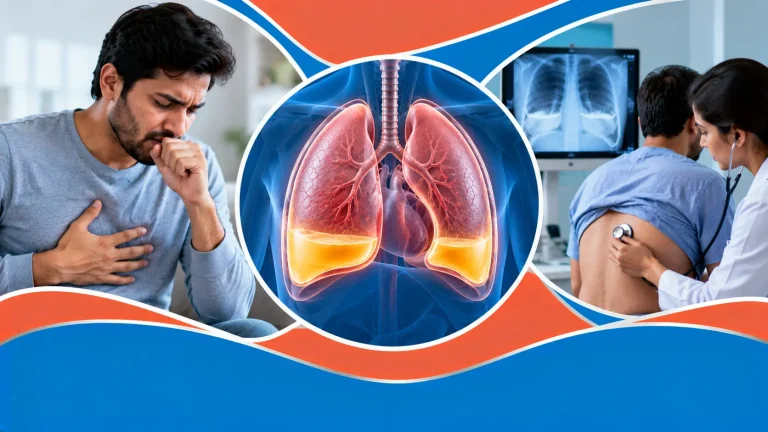
Each lung is wrapped in a thin lining called the pleura, two layers with a little fluid between them that lets them slide smoothly as you breathe. Bilateral pleural effusion occurs when excessive fluid builds up in the pleural space on both sides of the chest.
While it may sound frightening, it is often a signal that another condition needs medical attention.
What Is Bilateral Pleural Effusion?
A thin lining surrounds each lung, called the pleura, and consists of two layers with fluid between them that helps breathing by making the process smooth.
The presence of excessive fluid in this space is referred to as pleural effusion. If this condition occurs in both lungs, then it is called bilateral pleural effusion.
It is sometimes referred to as fluid collection in the pleural space, which clarifies that the liquid is in the pleural space between those two layers.
Dr. Sulaiman Ladhani, a chest physician at Wockhardt Hospitals in Mumbai, explains: “It means the collection of fluid around the lungs. It is very common in our country and can occur in any age group.”
That is the key point to grasp early. This is not one illness. It is a signal that some other problem in the body needs attention.
Why Does the Fluid Build Up?
In young individuals, infections or inflammation are usually the cause. Pneumonia and tuberculosis are common triggers in India, which explains why the condition is so frequently seen there.
In older individuals, other causes may be involved. A failing heart is frequently at fault. A heart that pumps too weakly allows fluid to collect around the lungs.
Kidney trouble or liver disease (specifically hepatic hydrothorax) can bring about the same result, and in advanced cancer, ongoing fluid buildup sometimes develops as well.
| Age Group | Usual Causes |
|---|---|
| Younger adults | Pneumonia, tuberculosis, infections |
| Older adults | Weak heart, kidney disease |
| Any age | Advanced cancer, low protein, chronic illness |
Certain factors push the risk higher. Dr. Preyas Vaidya, a consultant pulmonologist, points to several: high blood pressure that isn’t controlled, weak function on the left side of the heart, valve disease, kidney failure, low protein levels from prolonged illness, and overall physical frailty.
What Does It Feel Like?
Symptoms develop gradually, so people may not take them seriously. Pleural effusion symptoms may include:
- Shortness of breath or difficulty breathing, often the first symptom people notice.
- Pleuritic chest pain (sharp pain that worsens on inspiration).
- A persistent dry cough.
- Fever, whenever an infection is behind the problem.
The pattern of breathlessness offers a clue. “At first, it happens only with exertion,” says Dr. Ladhani. “But as the fluid increases, the person may feel breathless even at rest.”
Struggling for breath after climbing stairs is ordinary enough. Feeling breathless while resting quietly, however, means you should be seen without delay.
How Do Doctors Diagnose It?
The diagnostic process is fairly swift, since the fluid is often visible on imaging studies.
- Fluid collection in the lungs can be easily noticed on a Chest X-ray.
- Thoracic ultrasound provides a detailed look at the fluid location.
- CT scans are used for further analysis.
- In other situations, the physician will perform a thoracentesis. This can be a diagnostic tap to test the fluid for causes like infections, or therapeutic drainage to relieve severe breathlessness.
Transudate or Exudate: What Does the Fluid Type Reveal?
First, the physician takes a sample of fluid and then decides whether it is transudate or exudate. Transudative fluid is clear and low in protein content.
This usually occurs when the heart, liver, or kidneys are not functioning optimally, and fluid leaks out passively rather than as a consequence of active disease.
Exudative fluid is thicker and carries more protein and cells. Infections such as tuberculosis and pneumonia, along with cancer and inflammatory conditions, tend to produce this type.
The distinction narrows down the list of likely causes. A transudate points first to the heart, liver, or kidneys. An exudate sends doctors looking for infection, tuberculosis, or a tumor instead.
A set of measurements called Light’s criteria, which compares protein and enzyme levels in the fluid against levels in the blood, is commonly used to sort a sample into one category or the other.
How Is It Treated?
This is where most patients feel relieved. Treatment rarely targets the fluid by itself. It targets whatever caused the fluid.
“Bilateral pleural effusion usually involves treating the underlying systemic cause,” Dr. Vaidya explains. What that looks like depends entirely on the trigger.
- A heart problem calls for heart treatment.
- An infection is treated with antibiotics, or with anti-TB medicine when tuberculosis is involved.
- A kidney cause shifts the focus to kidney care.
For transudative effusions caused by heart or kidney issues, diuretics are among the most commonly used medications. These drugs increase the frequency of urination, helping to remove extra fluid from the body. Therapeutic drainage is not needed very often. As Dr. Vaidya points out, the majority of patients need no procedure because the fluid recedes once the root problem is under control.
Because TB is a major cause of this disease in India, addressing the infection directly allows the body to clear the fluid. Early and complete treatment is essential for a full recovery.
Recovery and Follow-Up: What Happens After Treatment?
Draining the fluid is often only a temporary measure. Doctors usually recommend a Chest X-ray a few weeks after treatment starts to ensure the fluid is reducing and not accumulating again.
Breathing becomes easier after a few days, although full lung expansion requires more time. A few simple breathing exercises taught by a physiotherapist can help the lungs re-expand fully during recovery.
Patients recovering from effusions related to the heart or kidneys need ongoing management of the initial disease. A major cause of relapse is neglecting follow-ups after breathing improves.
Any patient recovering from a tuberculosis-induced effusion needs to finish the entire treatment cycle with anti-TB drugs even if the symptoms have disappeared. Otherwise, this would become the main reason for relapse and drug resistance.
Can It Be Prevented?
You cannot head off every case, as some cases appear with no warning at all. Even so, careful management of the underlying conditions can tip the odds in your favor.
- Keep your blood pressure steady and controlled.
- Follow up regularly on any heart or kidney condition.
- Complete every prescribed course of treatment for infections, especially tuberculosis.
- Have a persistent cough or unexplained breathlessness assessed early.
- Eat well and hold your protein levels steady through any long-term illness.
When Should You See a Doctor?
Get urgent attention if you have any of the following:
- Shortness of breath that develops while resting
- Dry cough that lasts more than two weeks
- Fevers accompanied by chest pains or difficulty breathing
- Swollen legs along with breathing difficulties, suggesting possible heart problems
Acting early keeps treatment straightforward and speeds up recovery. Because a Chest X-ray delivers answers so fast, there is little sense in delaying care.
The Bottom Line
Bilateral pleural effusion sounds complicated, but it is typically a result of an underlying condition like infection, a weak heart, kidney problems, or liver disease. If the primary illness is managed, the body will usually clear the excess fluid.
It is crucial to act quickly. Respiratory symptoms must be addressed without delay. Assessment is a fast and straightforward process. To learn more, contact the pulmonology and chest center at Wockhardt Hospitals in Mumbai.
Frequently Asked Questions
1. Is bilateral pleural effusion dangerous?
It can be, though it usually responds well to treatment. Its severity depends on the underlying cause; once that is addressed, the excess fluid normally subsides.
2. How is it different from unilateral pleural effusion?
A unilateral effusion affects one side; bilateral affects both.
3. Does fluid in the lungs mean pneumonia?
By no means. Pneumonia is an infection of the lung tissue, but pleural effusion is an accumulation of fluid around the lungs for different reasons.
4. How long does it take to heal from that condition?
It depends on what caused it. Once the medication starts working, recovery lasts from a few days to weeks.
5. Can it return after treatment?
Yes, it can return if the underlying cause is not completely under control. Careful management of any heart, kidney, or lung disease prevents this.
6. Does it always mean hospital admission?
Not always. Mild cases are treated with medicines and regular checkups by doctors. You only go to the hospital if there is a lot of fluid buildup or the cause is serious.